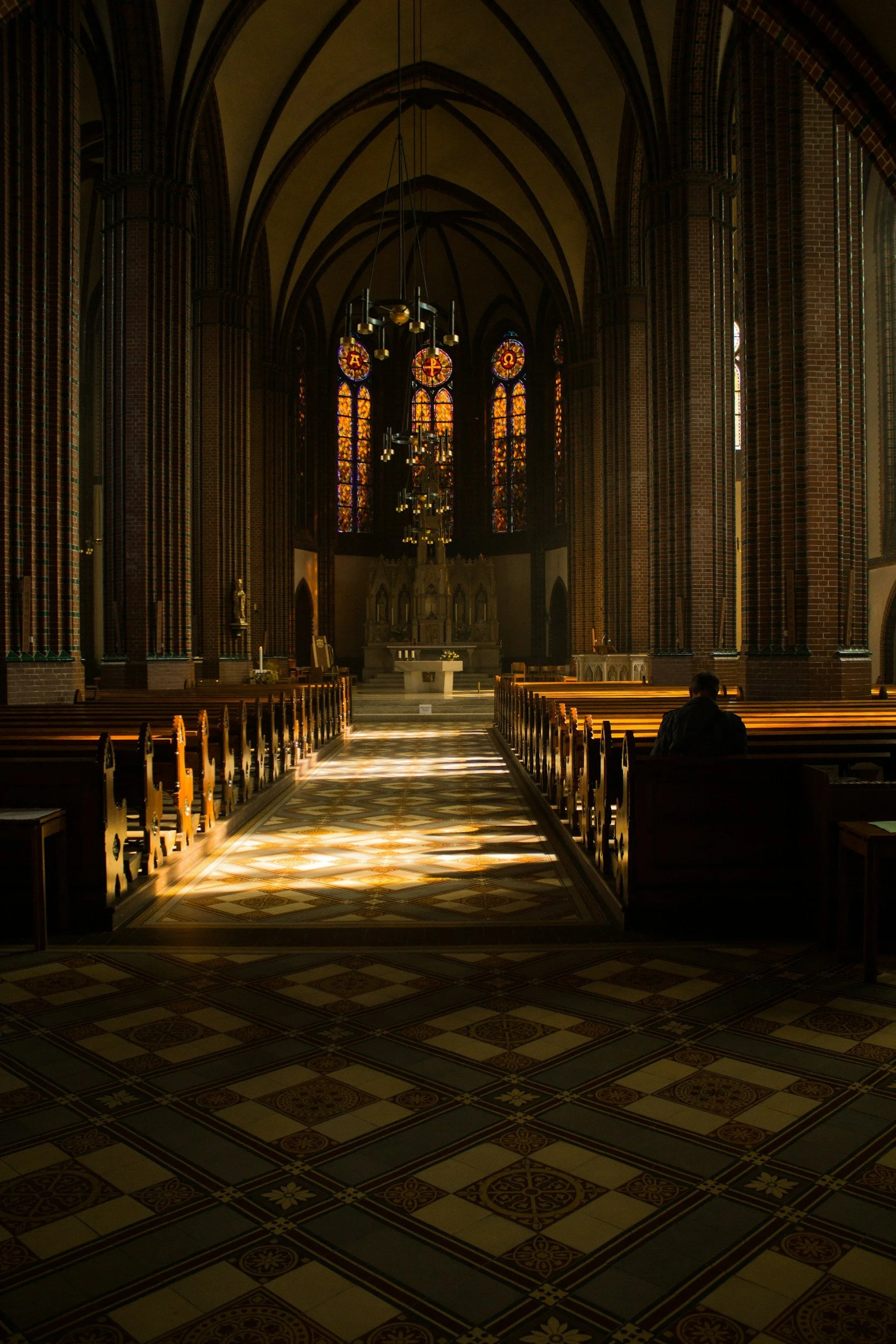
Heating Historic Churches: Why It Is So Difficult and How to Do It Better
Heating an historic church is one of the most misunderstood challenges in building services engineering. Unlike homes, offices or schools, churches were never designed to be warm. Their thick stone walls, vast internal volumes and delicate heritage features create a unique environment where comfort, conservation and cost are constantly in tension.
Over the past months, EngC Consulting has carried out detailed energy audits for several churches. These studies highlight the same recurring truth: heating an historic church is not simply a technical problem, it is a conservation problem, a comfort problem and a financial problem all at once.
This article brings together the key insights from our audits, combined with established guidance on church heating and temperature control, to help congregations and PCCs (Parochial Church Council) make informed decisions.
Why historic churches are so hard to heat
Historic churches behave very differently from modern buildings. Several factors make heating them both expensive and risky if done incorrectly.
1. Enormous thermal mass
Churches are built from thick stone walls, heavy floors and large structural elements. These materials absorb heat slowly and release it slowly. This means:
Most of the heat delivered during preheat is absorbed by the fabric, not the air.
Rapid temperature increases are almost impossible without huge energy input.
Trying to heat the entire volume to domestic comfort levels is rarely economical.
In our audit, more than 90 percent of the heat delivered during a two hour preheat was absorbed by the cold stone fabric. Only a small fraction warmed the air.
2. High infiltration
Historic churches are naturally leaky. Air enters through:
Tower vents
Gaps around doors
Single glazed windows
Cracks in the fabric
This constant air exchange increases heat loss and makes warm air systems less efficient.
3. Conservation requirements
Heating a church is not just about comfort. It is about protecting the building and its contents. Rapid temperature changes or incorrect humidity levels can damage:
Organs
Wooden pews
Altars and pulpits
Murals and paintings
Plaster and stonework
Guidelines from multiple dioceses and conservation bodies recommend:
Relative humidity between 45 percent and 70 percent
Temperature changes no faster than 1 degree per hour
Basic temperatures around 8 to 10 degrees
Service temperatures of 12 to 16 degrees
Anything more aggressive risks condensation, cracking, mould growth and long-term deterioration.
4. Short usage periods
Most churches are used for only a few hours per week. This means:
Continuous heating is wasteful
Long preheat times are impractical
Systems must respond quickly without stressing the building
This is why many traditional heating strategies simply do not work well in churches.
5. The Condensation Problem
One of the biggest risks in church heating is condensation. It occurs when warm, moisture-laden air meets cold surfaces such as:
Stone walls
Roof timbers
Single glazed windows
Condensation can lead to:
Mould
Salt efflorescence
Timber decay
Damage to murals and plaster
Organ deterioration
Warm air systems, if used incorrectly, can make this worse because they push moist air upwards into the coldest parts of the building.
Proper ventilation strategy is essential. For example:
Avoid ventilating in spring when warm outdoor air meets cold church walls.
Avoid summer ventilation when humid air enters a cool interior.
Keep doors closed as much as possible during winter services.
These principles are often overlooked but are critical for building protection.
Lessons from a typical mid-size historical church
An example of the importance of such an exercise becomes clear very quickly when looking at buildings from different eras with different architectural styles. Take a church interior with a heated volume of approx. 3,000 m³, i.e. that of a small-town church, and the following picture emerges.
While the heat requirement for a Roman style building with massive, thick walls and a relatively small proportion of windows can be perhaps 65 kW, a calculation for a Gothic room of the same size with correspondingly large window areas will result in a heat requirement of approx. 95 kW.
Key findings for our Medieval type of church included:
Heated volume 2,900 m³ resulting in a heat loss at design conditions at around 65 kW.
The existing 40-year-old warm air heaters operate at only 73 percent efficiency.
Annual run hours of gas heater approx. 390 h.
Most of the heat delivered during preheat is absorbed by the cold stone fabric.
Ensure air temperature during service between 12-15ºC will not be exceeded
Optimised control system that measures rel. humidity and air temperature
These findings are typical of many Victorian and medieval churches across the UK.
What Heating Strategies Actually Work?
There is no single perfect solution, but several principles consistently deliver better outcomes. It is also worth noting that every 1 degree less in the church the heating bill drops by around 7%. Heating up large churches is very expensive, and the focus should be on maintaining an acceptable base level temperature and humidity to prevent damage to the fabric from condensation or thermal stress levels.
✓ Heat the people, not the building
Trying to heat the entire nave is rarely efficient. Better strategies include:
Infrared heating in the Chancel
Pew or seat heating
Localised electric floor mats under rugs or convector heating
Targeted heating for choir, organist or clergy
These systems warm people directly without overheating the building.
✓ Maintain a stable basic temperature
A background temperature of 8 to 10 degrees:
Reduces moisture fluctuations
Protects the organ and artwork
Shortens preheat times
Reduces condensation risk
✓ Use slow, controlled heating ramps
A maximum of 1 degree per hour protects the building fabric and avoids stress on materials.
✓ Improve the fabric where possible
Even small improvements help:
Draught reduction
Door lobbies
Secondary glazing, where permitted
Ceiling insulation
Sealing tower vents
✓ Choose heating systems based on usage patterns
For churches with short, infrequent use:
Fast response systems like warm air or infrared are often best.
Utilise existing ducting where possible
Upgrade heat source to a modern version or consider hybrid solutions with heat pumps
At EngC Consulting, we combine all of these. Our services include:
Full energy audits
Heat loss modelling
Heating strategy development
System comparison and cost analysis
Conservation-aligned temperature and humidity guidance
Support with diocesan approvals and funding applications
Whether you are replacing an ageing warm air system, exploring heat pumps or simply trying to reduce running costs, we can help you find a solution that balances comfort, cost and conservation.
Final Thoughts
Historic churches are extraordinary buildings, but they require extraordinary care. Heating them is not about achieving domestic comfort.
It is about:
Protecting the building
Supporting worship
Managing energy responsibly
Preserving heritage for future generations
With the right strategy, churches can be warm enough for services, safe for their artwork and organs, and far more energy efficient than they are today.
If your church is facing rising heating costs, struggling to maintain comfortable services, or planning to replace ageing heating systems, now is the time to take a strategic, conservation-led approach. Every historic church is unique, and without specialist assessment, heating upgrades can unintentionally increase running costs or place irreplaceable heritage features at risk. EngC Consulting provides expert church heating and energy audit services designed specifically for historic and listed buildings, helping PCCs, dioceses and church leaders make informed, cost-effective and conservation-aligned decisions. If you want to reduce energy bills, protect your church fabric and create a more comfortable worship environment, contact EngC Consulting today to arrange a professional church heating assessment and discover the most effective heating strategy for your building’s future.